Miami · Aerial
Drone Filming from a Boat, Miami.
Flying offshore from a moving deck is not the same job as flying from a parking lot. You lose line of sight faster, the RF environment is worse, the launch and recovery platform is moving, and there is no walking back to the van for a spare battery.
Can you fly a drone from a boat in Miami?
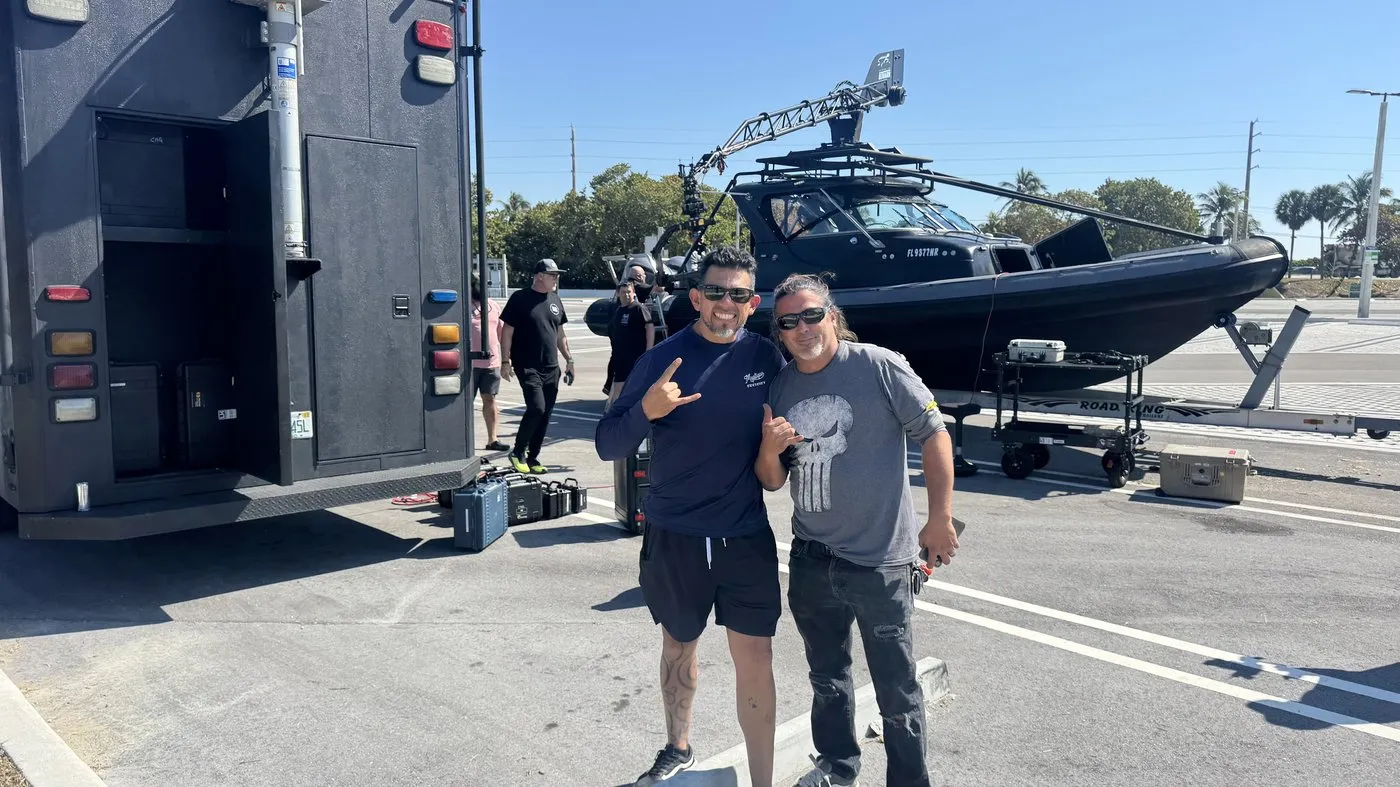
Yes. The Basilisk launches and recovers drones offshore from a purpose-built control position, flown by FAA Part 107 pilots, with aerial and surface feeds graded together in the on-board DIT dark room.
Included
What you get
- —FAA Part 107 certified pilots working from a purpose-built control position, not a folding chair on the transom.
- —Long-range RF and integrated telemetry built into the vessel, not improvised on the day.
- —Launch and recovery off a working deck, offshore, repeatedly.
- —Aerial and surface footage graded live in the same on-board Dark Room, on the same timecode.
- —Airspace and marine permitting coordinated together, because near the Port of Miami they are the same conversation.
The Reframe
The aerial unit should not be a separate vendor
The standard arrangement puts the drone team on a chase boat, the camera on a picture boat, and a producer on the radio trying to keep them in the same frame. It costs two day rates and produces two sets of footage that nobody sees together until post.
On the Basilisk the aerial unit launches from the same deck the crane works from, and both feeds land in the same Dark Room where a DIT is matching them live. If the aerial does not cut with the surface, you find out on the water — while the light is still there and the boat is still out.
FAQ
Questions
Are your drone pilots licensed?+
Yes. Aerial operations are flown by FAA Part 107 certified pilots working from the Basilisk's integrated Marine Drone Control Unit.
Can you fly offshore, out of line of sight of land?+
Yes. The Marine Drone Control Unit is built for long-range offshore operation, with integrated telemetry and RF designed for the marine environment, and launch and recovery from the vessel itself.
Can aerial and surface footage be matched on the day?+
Yes. Both feed the on-board DIT Dark Room, where Cyanview live grading matches them on one timecode while the boat is still on the water.
Get a quote in 24 hours
One vessel, one calendar. Send your window before you lock your schedule.